


Videos, Podcasts & Reading
Lessons from history: How do long-term investors navigate market bubbles?

Watch the video
Listen to the podcast
In this episode of A Value View, The Merchants Trust’s Simon Gergel, Andrew Kosh and Richard Knight explore lessons from past market bubbles, from investor psychology and fear of missing out to the opportunities created when capital becomes concentrated around dominant themes.
This is a marketing communication. Please refer to the Key Information Document or KID before making any final investment decisions. Investing involves risk. The value of an investment and the income from it may fall as well as rise and investors might not get back the full amount invested. Past performance does not predict future returns. The mention of any particular security or strategy should not be considered as a recommendation. For further information on the Merchants Trust please go to www.merchantstrust.co.uk.
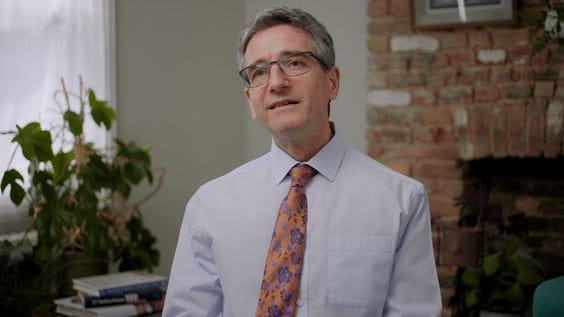
Andrew Koch (AK): I would say investment valuation is always important. Stories don't pay your pension.
Richard Knight (RK): There can be a self-fulfilling prophecy, a virtuous cycle that spun too fast.
Simon Gergel (SG): What we try to do is to stand back from that and say, look, if everyone's going over there, there may be other areas that have been left behind.
John Cronin (JC): Hello and welcome to a Value View from the Merchants Trust. I'm John Cronin, and in this episode, I'm joined by Simon Gergel, lead manager of the Merchants Trust, together with fellow portfolio managers Richard Knight and Andrew Kosh. Now every generation seems convinced it's living through completely unprecedented times, whether that's the rapid expansion of the railways in the 19th century, the dot-com boom, or today's excitement around artificial intelligence (AI). History shows that markets can become captivated by a single big idea. But what can investors learn from those moments? And how do you avoid getting swept up when everyone else seems convinced they've found the next big thing? Simon, Andrew, Richard, great to have you on the show.
JC: It's a fascinating subject that we've got coming up. I guess the first thing I want to explore really is: do bubbles always look obvious in hindsight? Let's start with that simple question, Simon. Looking back, is it easy to point to a moment like the railway boom or the technology bubble and say that is a bubble, but at the time, is it so easy to observe, so easy to see?
SG: I wasn't around for the railway boom, but I was there for the technology bubble. I think it can be sometimes. Sometimes I don't think it is because you see huge, genuine changes in society and massive opportunities, and it's hard to know quite how valuable they're going to prove to be. Other times you see enormous investment going in, almost excitement, perhaps over-excitement in share prices. Sometimes excess leverage, cases of people who know nothing about the stock market getting involved. There are times, I think, when you can see it in advance, but it is quite tricky to know how far enthusiasm for a theme or an idea is going to go.
RK: I think bubbles are a natural part of financial history. The whole capitalist system, stock markets are wonderful things because they allow a pooling of capital from a very broad range of sources. The great thing is that new technologies can be funded and society can be changed. If we go back to the 18th century, joint stock companies, later canals, 19th century railways, then the information technology bubble and, of course, TMT at the turn of the century. You could even call elements of the great financial crisis the property bubble before then.
But what we're seeing there is the flip side of a lot of people being brought together for what starts as a very, very good idea and may create lasting benefits to society. Absolutely, the railways did in the 19th century, as did the TMT bubble, leaving this fantastic infrastructure for us. But there can be a self-fulfilling prophecy, a virtuous cycle that spins too fast.
That leads to overinvestment in that capacity, in that new technology, and over-exuberance.
Markets are very, very psychological. Everyone starts moving in the same direction. People get left behind, they feel the need to move in the same direction, and ultimately, you get misallocation of capital.
I think that almost every bubble looks obvious in hindsight. The interesting point is whether they look obvious in foresight, in advance. What's interesting when you read about historical financial bubbles is that most of them do. It's just that the participants can't quite work out how to get off or where it will stop. They get carried away with their own momentum. Sometimes that means they end up believing very optimistic analysis. Other times they're right about the change, they're wrong about the time frame. I think in the 1840s, to justify the investments that were being made in Britain to build the railways, you needed the industry to multiply by something like a factor of 10 in five years, between 1845 and 1850.
In reality, it doubled. Now, a doubling industry is very, very exciting. But that wasn't enough to generate a good return for the people putting their capital in in 1845.
JC: It's asking almost to predict the future, to sense when a bubble is about to happen and to call it, I guess, which is a tough call for, frankly, anybody. A simple question to you, Andrew. Why does it keep happening? Bubbles don't just happen occasionally. There’s a history of them.
AK: Human nature doesn't really change over the centuries. Greed is a powerful driver, particularly in financial markets. The other side of that is fear. When fear starts to come into play, then you see these absolute collapses.
AK: It's partly the fear of missing out, seeing other people doing well, the excitement, the desire to be part of something, not wanting to stand out and be different. It's psychologically hard to stand apart from the crowd.
JC: Right. So it's as simple as that, It's human nature.
RK: Even more powerful than greed and fear is the desire to belong, to be part of a group that's all saying something reasonably similar. We all feel it in our own lives in different ways. We don't want to stand out too much. Being a value investor is about standing out.
JC: Simon, does it surprise you that there are lessons the investment community, those thinking about this subject all the time, don't learn? Or is it impossible to learn the lesson from something that's constantly changing?
SG: I think the problem is there is so much money chasing these areas that if you don't participate, that money will go elsewhere and somebody else will facilitate that. I think what we try to do is just stand back from that and say, look, if everyone's going over there, there may be other areas that are being left behind. There might be opportunities where we can have a lot more confidence in the cash we're going to get back, the return we're going to get on our investment, the dividends we're going to earn from investing in these companies and the assets we're buying on behalf of shareholders. I think one of the great things about having an investment trust like the Merchants Trust is we've got permanent capital from shareholders and a board who will back us to say, okay, I can't really be sure about that area over there. There may be a great opportunity. But in this area here, the stock market, even though it's out of favour, there are some strong businesses trading at incredibly unusual valuations. If we buy them at those levels and hold them for four or five years, we should make a very good return and generate a good income stream. We're not necessarily trying to call whether the bubble is right or wrong or whether that theme is right or wrong. We're trying to make money on the things that we understand. Bubbles are fascinating, but often what they leave behind is opportunities elsewhere. That was the same in the TMT bubble, there were many what were called old economy companies at the time, if you remember, most of which are still thriving today, which were being offered for well below what they were worth.
JC: So there are opportunities before a bubble might burst, and certainly afterwards. They present opportunities for the value investor on either side.
SG: Yes, I think if you focus on what you understand and the cash flow you're buying into, and you're buying at a sensible valuation, and if that cash flow is sufficiently robust and you understand what the businesses do and why they deserve to exist, you can keep doing that and make a good return without having to worry about an area that's actually very, very hard to analyse.
JC: Richard, what happens after all the excitement fades? The bubble perhaps has burst or changed direction, or whatever it might be. Sentiment changes. What happens next?
RK: Well, usually there's a fair bit of dejection, and maybe even disgust on the part of investors. Often that can go too far and leave these fantastic opportunities. As Simon mentioned, the formation of a bubble often leaves other interesting things on the sidelines. That's a fantastically rich vein for us to mine as value investors. But the aftermath of a bubble can do exactly that with the previous focus. There's an opportunity, especially when a bubble coincides with financial leverage, which most of the time they do.
There are always opportunities when a previous set of investors have found themselves overleveraged and end up being forced sellers. Quite a lot of the less interested parties might have been extremely enthusiastic and then run for the hills after things look like they're not going as well as was necessary to justify the enthusiasm at the start.
AK: I remember at the end of the TMT boom in 2002, I bought two technology companies. For both, the market capitalisation was less than the net cash on their balance sheet. I was getting the whole company for free. Rare opportunities.
JC: I assume it did quite well on that.
AK: Very well.
JC: I suppose it raises a bigger question here around patience. Is that one of the few competitive advantages really that are left, would you say, Andrew?
AK: I think it's crucial. It's one of the advantages we have in the Merchants Trust with the permanent capital that we have, the knowledge and patience of the board, and the trust we've built together with them over the years. Sometimes you'll have a year or two here or there where the performance isn't as good as you would like, particularly if a market is going into a bubble. But that patience allows us to keep doing what we know how to do well and what we've always focused on, and that will come and pay us dividends in the long run.
SG: The stock market is not very good at having two different thoughts in its head at the same time. The more it focuses on the short-term opportunity and the great potential of one area, the more it tends to neglect other areas and create opportunities. I think the shorter the time horizons become, the more we should, as investors, take a longer-term perspective and take advantage of the fact that you hear it all the time. Actually, at the moment people say, "Well, I think the housebuilders are clearly cheap, but I wouldn't buy them yet because I don't know when conditions are going to get better."
Well, of course, when people know conditions are getting better, the share prices will have gone up a lot. It's amazing how often you hear that type of phrase: "This is definitely cheap. There's value here, but I wouldn't buy it yet." As value investors, that makes us very interested.
RK: Markets that create bubbles are also very narrative-driven. They love a story. Those stories are sometimes extremely positive, like they might be around the subject of the bubble. They can also be extremely negative and related to what the bubble is creating. For instance, we see this huge dislocation today in software stocks because those companies may well be disrupted by AI.
That narrative shifts so quickly in the market and to such extreme levels, from very high to very low valuations, really just on the smallest bit of incremental news, that you're looking at a market inefficiency. It's just up to our judgment to work out where that inefficiency precisely is and whether it was before or whether it was after. The emotion of the market is very much on show there, not as a weighing machine, but as a voting machine.
JC: How about a little bit of judgment just for a final wrap on this subject, thinking about what investors should be remembering now. Without making predictions about the current market, are there lessons that investors can take away whenever enthusiasm becomes concentrated in a particular theme? What are the lessons they should be taking from that, Richard?
RK: Firstly, we keep a clear head and make sure that your investments have true diversification. In periods that can be associated with bubble-like behaviour, the markets can become extremely concentrated. I'd argue that they are very concentrated now on historic measures.
If you were to buy a broad index, say, which is often thought of as very diversified, it's actually not really very diverse at all at the moment, particularly indices that contain a large element of US investments. True diversification is something we can build with the Merchants Trust. That means a real balance of risk and reward from different parts of the economy, different business ideas, different idiosyncrasies of the reasons why we think the investments are going to be valuable. That's what we're trying to do, build this broad portfolio that can perform in all weathers.
JC: Andrew, what would you add to that? What would your word be?
AK: Yes, I would say investment valuation is always important. Stories don't pay your dividends. Stories don't pay your pension.
JC: And Simon, your last thoughts.
SG: Probably use a phrase from one of the films: follow the money. If you can see a stream of cash flow coming from a business or an industry, and you can invest and get access to that stream of cash flow for below what it's worth, that's compelling. At the moment, there are plenty of opportunities to buy into streams of cash flow for what we think is well below what they're worth. I think if you follow the money, if you think about hard assets, cash generation and real profits coming back to you as an investor, that's a great place to start.
JC: Well, it's, as I say, a fascinating subject. There will, I'm sure, be many more bubbles to come in our time. Perhaps we can discuss them even here on a Value View. Simon, Andrew, Richard, thank you all very much indeed for your time.
SG: Thank you.
RK: Thank you.
AK: Pleasure
JC: Thanks for watching A Value View. If you’ve enjoyed this episode, do subscribe, comment below and share it with anyone interested in long-term investing and understanding what history can teach us about today’s markets.
You can find out more about the Merchants Trust, together with Simon’s latest investor updates and market commentary, by visiting merchantstrust.co.uk.
We’ll see you next time.