Videos, Podcasts & Reading
Behind the scenes with The Merchants Trust investment team
Watch the video
Listen to the podcast
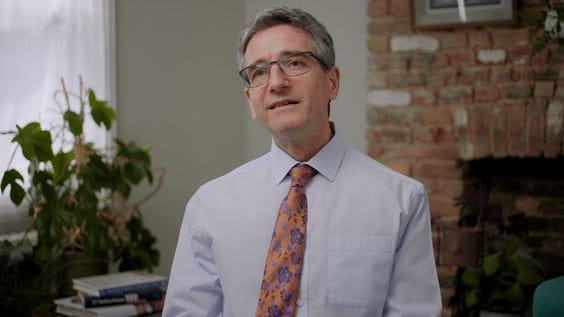
In this episode of A Value View, The Merchants Trust brings together its three Portfolio Managers together for the first time to offer a behind-the-scenes look at how investment decisions are made. Lead manager Simon Gergel is joined by Andrew Kosh and Richard Knight to discuss how different perspectives, constructive challenge and collective experience help shape the portfolio
This is a marketing communication. Please refer to the Key Information Document or KID before making any final investment decisions. Investing involves risk. The value of an investment and the income from it may fall as well as rise and investors might not get back the full amount invested. Past performance does not predict future returns. The mention of any particular security or strategy should not be considered as a recommendation. For further information on the Merchants Trust please go to www.merchantstrust.co.uk.
Simon Gergel (SG): There may be an impression that it's just me working on my own in an ivory tower somewhere, but it's not. It's the three of us, and a much, much bigger team behind us as well. When we're making decisions, they are considered, they're challenged, and there's different perspectives brought to bear.
Richard Knight (RK): We might be very passionate about ideas we like, or very passionate about ones we don't. Sometimes it's degrees of comfort with different types of uncertainty.
John Cronin (JC): Hello and welcome to a value view from the Merchants Trust. I'm John Cronin, and in this episode, we're going to do things a little differently. Usually, we spend our time talking about markets, companies and investment ideas, but today we're going behind the scenes to explore something that's just as important, namely how those investment decisions are made. Joining me are Simon Gergel, lead fund manager with the Merchants Trust, together with Richard Knight and Andrew Kosh, who work alongside Simon as part of the investment team. We're going to lift the lid on how the team works together, how ideas are challenged and why different perspectives can lead to better investment decisions.
JC: So, Simon, Andrew, Richard, great to have you in the studio. Thanks for your time.
SG: Great to see you, John. Good afternoon.
JC: Well, look, we've got lots to chat through and the opportunity of speaking to you all as well, which I think is exciting, different for us. We've brought the whole team together. Simon, you and I have spoken many times over the years now on a Value View, and this is the first time that we've brought the full team together. So why do you think it's important to have this conversation?
SG: I think it's great because there may be an impression that it's just me working on my own in an ivory tower somewhere, but it's not. It's the three of us, and a much, much bigger team behind us as well. And it's important that people understand that when we're making decisions, they are considered, they're challenged, and there's different perspectives brought to bear. And it's not just me. And if I got hit by a bus tomorrow, there's other people there as well.
SG: There's all sorts of reasons why it's important to understand that there's a team behind it.
JC: Hopefully not going to get hit by a bus at any point soon. But that sense of the team is, I suppose, exactly as you say. It's more than the total of one person.
SG: Yes. Any person, any individual is subject to biases, errors of judgment or just missing stuff. So, it's great to have other people looking for ideas, challenging and discussing, and that makes everyone more effective.
Andrew Koch (AK): I think the other thing I'd say about that is that quite a number of fund management companies are based on a star, one person, and that can work well. But often one person will have times when they're out of favour, or their star goes adrift, or they lose focus. And it's not like that at all here. There's a very strong team behind Simon.
JC: Okay, Andrew. Thank you so well, let me stick with you on this.
JC: What happens then when someone has an investment idea?
AK: What we're trying to do is use the experience of all of this, our different knowledge and our different strengths, to pull it all together and challenge the idea. See where we could be getting something wrong, look for the weaknesses, probe everything and just get to the truth of whether this will make a good investment or not. Irrespective of whose idea it is, whether it gets in the portfolio or not, is this the right idea?
JC: Okay, Richard, what Andrew is saying is that they're challenging each other and looking for the weaknesses in the ideas. Is that your experience too? Is that what you bring to the table?
RK: First, I just want to say it's a pleasure to be here. I'm a long-time listener and first-time guest.
JC: Good man.
RK: Andrew and Simon are right. We're all quite strong-willed people, and we have our own views and ideas, and we don't shy away from challenging each other's views.
RK: But what's important is that we think similarly enough and have a shared value-based philosophy, meaning that we can debate robustly but still be speaking the same language. And I think that's important.
JC: So more of you means not just more scrutiny, but more ideas.
RK: I think there's a balance, too many people in a team and perhaps processes can grind to a slow pace. Three is an excellent number because you can mediate between disagreements much more easily with a third party that maybe doesn't feel quite as strongly on the issue as two of the others, I think three is an excellent dynamic.
SG: What we try to do, even with three people, is that if somebody is passionate about an idea and the others don't find a fatal flaw in it, then we may well, even if the other two people don't think it's such a great idea, still have a small position in that company, a small investment based on the passion and conviction of that one individual, because I believe that everyone should have some influence individually.
SG: But I think where we do agree, we tend to have the biggest positions.
JC: Well, let's expand on that a little bit more. Simon, you're talking about the various positions that you might take. What are the different roles, then, that you might assign or see each other as having, if indeed you do?
SG: I think we all have different areas of expertise. Andrew's got a lot of expertise in the pharmaceutical sector, for example healthcare. Richard’s got a huge amount of experience in energy and banking. We have areas and sectors that we're stronger on or closer to than others, but we're all generalists at heart. Each of us can look at each other's investment case. We have a written investment case that we'll present, and each of us is capable of looking at an investment case and forming our own view on it. We're all sufficiently general to do that, but there are areas that we've got more experience of individually.
JC: So, areas of sector specialism, as you say, and that just means that you can dig a little deeper as an individual and advise the rest of the team.
RK: It means that often the person who might have a little bit more experience, a bit more familiarity with a sector, might take the lead on an investment idea, but that generally is core to all of us, and we shouldn't be too humble or shy about it. Although it means that we're not spending all our time building up a very deep expertise just in one area, we are all responsible for all the ideas in the portfolio. We're confident to talk about them. We're not delegating our decision-making power, our judgment or our ability to make a decision. I think that's important because it means we can all take a whole portfolio view.
JC: A bit of collective responsibility perhaps.
AK: There have been occasions where someone has been the champion for an idea, say, the tobacco sector, and it's worked poorly for us for a while.
AK: It's super helpful to be able to go to a colleague and say, am I getting emotional about this? Will you come in and do a review for me? I know you're not the expert, but you're a fresh pair of eyes. That's what we did a couple of years ago, and it was absolutely the right decision to make. If anything, we increased our position, and that came home in spades over the next two years. It's very helpful to increase your conviction if you can have a fresh pair of eyes and say, yes, I completely agree with the initial diagnosis, the initial analysis. Keep going.
RK: I think that's possibly even more important with our value-based style, because we quite often find ourselves in reasonably contrarian positions where there is always, or often, an argument as to why something's gone wrong, as we're thinking about putting it in the portfolio or even keeping it in the portfolio if we were perhaps a little bit too early. So that challenge, and someone taking the other view to say, "Well, actually this is cheap for a reason," is important.
JC: This all sounds very healthy and harmonious. What about disagreements? You're three experienced professionals; you're not always going to agree. How do you deal with disagreement? It sounds like you encourage it. But if there are very strong views, Simon, that must be something that you have to think about.
SG: I think the first thing is we all respect each other, so we can disagree quite passionately sometimes about an investment idea or a company, it's less about the company, it's usually more about whether it's a good investment than whether it's a good company. We can disagree about that, and we respect each other's views and opinions. I think if there's a lead person who's really pushing an idea and, as I tried to say earlier, the others are okay with it, even if they're not fully in agreement, I'd encourage people to have some individual positions that they champion and monitor.
SG: Otherwise, one of the problems of being contrarian is that often your colleagues don't agree with you either, but it can still be right, if there's an idea that's been well thought through, it can be right to have a small position because it may well be the right call. But more often than not, I'd say either all three of us agree, or at least two of us do. It's incredibly important to have that right environment.
JC: How does a view carry? If there's stark disagreement, does it go to a vote or is it usually reached through agreement?
AK: We get on very well. There's no ego on the team, so I don't think we've ever had a formal vote. It's usually clear from the way we've talked about it, through a calm discussion. Even when I've had a stock I've really wanted, really believed in and thought was a good idea, if the others don't agree, it doesn't get in.
AK: That's fine. What we're really trying to do is get the very best ideas into the portfolio. If I can't convince Richard and Simon, it can't be that good of an idea.
SG: If you think about our investment process, where we think about the fundamentals of a business, the valuation of a business, and the external thematic environment that the company is operating in, we may disagree on. So, there may be an external theme that some of us think is demographic themes very powerful, very important, and others might think this is less of an important issue. We might. We might disagree about that part of it, but it might be sufficiently cheap that we're all going to have within their sufficient value there. but it's not always black and white. It's not always. Yes, it's a good idea. No, it's a bad idea. It can be a disagreement about an aspect of the investment case or the process.
JC: So, it's more nuanced.
SG: Yes, absolutely. And the great thing about a portfolio is that you don't have to have every position at 3%.
SG: You can have a 1% position or a 2% position depending on your level of conviction and upside.
JC: And Richard, when was the last time you disagreed with Simon and Andrew on a particular investment idea?
RK: It's hard to find a binary like that because we're dealing in risk all the time. Anyone who claims to be certain about any one particular investment idea, whether positively or negatively, should probably be distrusted. We are, as much as we might be, very passionate about ideas we like or very passionate about ones we don't. It's degrees of comfort with different types of uncertainty, and as Andrew put it earlier, if there is strong disagreement from two other people on our small team, then that should tell us something about the degree of uncertainty we may have. That doesn't mean we won't have a position at all, but it probably means we're a little bit more careful about the position size or perhaps doing a little bit of extra due diligence than we might otherwise do.
JC: So, I want to move on from the disagreements, or the healthy debate, to what that says about how you work together in terms of the experience that you all bring to the table. Has the time that you've worked together shaped the way that you reach decisions now? Have you changed the way that you approach things through the experience of working together?
SG: I'm not sure it's changed dramatically. I think having three people rather than two makes it a lot easier to crystallise a decision, because if there are two people and you disagree, that's quite tricky. But the third person changes the dynamics and makes it much easier to coalesce around something, or maybe say, "Okay, two of us don't have a strong view, but the third person has a really passionate view. Let's stay with that." So, I think three works well. That's probably been the biggest change over the last four or five years when Andrew joined us.
RK: Simon's been in the market a long time, I'm extremely fortunate to work with someone who's been through those cycles and seen so many points in time that can be extremely volatile, quite scary in the stock market for the holdings you've got and for your positioning. I read a lot about financial crises and disruptions and all sorts, and I obviously have experience, just touching the great financial crisis, but it's different when you feel it first-hand to just reading about it. What we're trying to do in this industry is much more about controlling your emotions than people realise, and perhaps much less about being the smartest person in the market or doing the most research into an issue. The market is inherently emotional, and it's extremely tempting to follow that emotion when it's been very strongly exhibited. One of the things I find best about working with Simon is that calmness in a kind of crisis, or in what might not seem like a crisis later, but always feels like it at the time, or can do.
RK: And it's about keeping your cool, really.
JC: So, just picking up on the point you've made there, Richard. Markets, as you say, can become emotional. So, I guess the point I'm interested in exploring is, in amongst all of that, does having the team help you stay more disciplined, Andrew? Is that your experience?
AK: Yes, definitely. There are times when there's news out in the morning, important news. Often, it's not black and white. It's very helpful to look at it, analyse it as best you can, but then sound it off your colleagues. You know that company as well, because when stocks are moving extremely quickly, it's easy to get forced into thinking you need to act. It's lovely to have the sounding board of two colleagues to explain what you think, get their pushback and hear them say, "Oh, but is that really that important?" or “Oh yeah, I see what you mean. This fundamentally undermines the company and its competitive position."
AK: We need to act. If you're just on your own when everything is going haywire, it's too easy to get emotional. But we've got to stay rational and calm.
JC: Anything you'd add to that, Simon?
SG: Andrew's absolutely right, and it can go the other way as well. There can be things you look at and think, "Oh, that's interesting, but is it really important?" And somebody else says, "Actually, that is a really important issue that's come up." It might be a great opportunity for shareholders. Sometimes you see a share price down 10% on an announcement and think, "I didn't think it was that bad." If your colleagues agree that the fundamentals, the long-term value of the company, haven't really changed, then just because the weather's bad for three months and trading is a bit weaker, if the shares are 10% cheaper than they were yesterday, that could be a great opportunity. Sometimes on your own you don't feel brave enough to make that decision.
SG: But if the two or three of you think this is a great opportunity, then it really reinforces that and gives you the courage and conviction to do that.
AK: I've had that at other times in my career where I've been the only real value investor, and it's quite hard sometimes to be the contrarian that you can be and really take advantage of the markets. If everyone else looks at you like you're mad, it's quite difficult. If you've got two sane colleagues who think in similar ways, it works very well.
JC: Okay, that's a great way of putting it. I want to put one question to you all as we get close to the end of our time together, and that's really a reflection for those watching for the first time, or those seeing you all together for the first time and who are invested in the Merchants Trust. What's the one thing that you think they probably don't realise about how you work together? The one thing that maybe would surprise them? A tricky question, but something that we can share now that will be a useful reflection for them.
SG: When you've got an investment idea, what you really want to do is try and disprove it and prove it wrong. If you can't prove it wrong, give it a hard time, get somebody else to give it a hard time, after you've really challenged it, you still think it's a good idea, it's much more powerful than if you come up with a good idea and don't really think about the alternatives. I think working in a team allows you to do that, particularly where people have a similar mindset and a similar approach.
JC: So, stress testing it.
SG: Stress testing it. Devil's advocate. Whatever you want to call it. Having that contrary view really allows you to build conviction.
JC: Andrew, how do you think you would add to that?
AK: I think because we don't have egos in the team. There are very few black and whites. Most of what we're talking about is shades of grey, that's why you'll see us start with a smallish position, because it looks interesting.
AK: It's on the cheap side. Things happen. Valuations change, and we'll gradually build up a position. It's very rare that we come in and say, "Brilliant idea. 3% position." It's more steady, more careful.
JC: Right. Thank you. And, Richard, any thoughts you'd add to that?
RK: I think it requires a lot of emotional discipline. There's always a reason to follow the market, either too far down or too far up on any particular investment when things are going badly or very well. That discipline, shared by like-minded colleagues, is so powerful. It's that depth of bench, if you like, both on the team, small though it is, and across our wider platform as well, and of course, our interactions with the board, which are hugely helpful in providing that extra layer of challenge from very experienced people.
JC: Well, it's fascinating to hear how you're all working together and to get a sense of that insight into the way the Merchants Trust functions. But, Simon, perhaps I can leave the last words to you, just in your thoughts on what that tells us about the approach that you take as portfolio managers, as investors.
SG: Well, it is a team, it is a team approach. So, it's not just the three. It's not just me. Certainly, it's not just the three of us, but there's a whole team of investors. There's a whole team of company secretaries. There's the board who sit above and check on what we're doing in the investment trust. It really is a team endeavour to build the portfolio, to challenge it and make sure it's appropriate to deliver both the total return we're trying to deliver, but also the income requirement, which I haven't really talked about. It's very important that we focus on trying to deliver a steady, rising dividend over time as well. So, I just emphasise that it really is a team approach.
JC: Well, we've got the three of you in the studio actually. It's a much bigger team than that.
JC: Well Simon, Andrew, Richard, thank you very much indeed. It's great to have you in the studio and thank you for your time.
RK: Thank you.
JC: And thank you for watching A Value View. If you enjoyed this episode, do subscribe, comment below, share it with anyone interested in understanding what really goes on behind the scenes of long-term investing, and you can find out more about the Merchants Trust, together with Simon's latest investor updates and market commentary by visiting Merchants Trust. We'll see you next time.